The Art of Slow Travel: Why We Need to Shift Gears
We are thrilled to share today’s guest blog post written by a longtime friend, valued member of our collective, and a true pioneer of mindful tourism: Himanshu Shekar, the CEO and Director of Delhi By Cycle (DBC).
Founded in 2009, Delhi By Cycle was the very first city cycle tour company in India. Over the last 16 years, DBC has hosted more than 60,000 travelers, transforming how people experience the country. By swapping crowded tour buses for bicycles, DBC pairs the philosophy of slow travel with immersive, sensory storytelling, inviting travelers into the narrow lanes, rich history, and living communities of Delhi and beyond.
Below, Himanshu shares his passion for why changing our speed changes how we connect with the world.
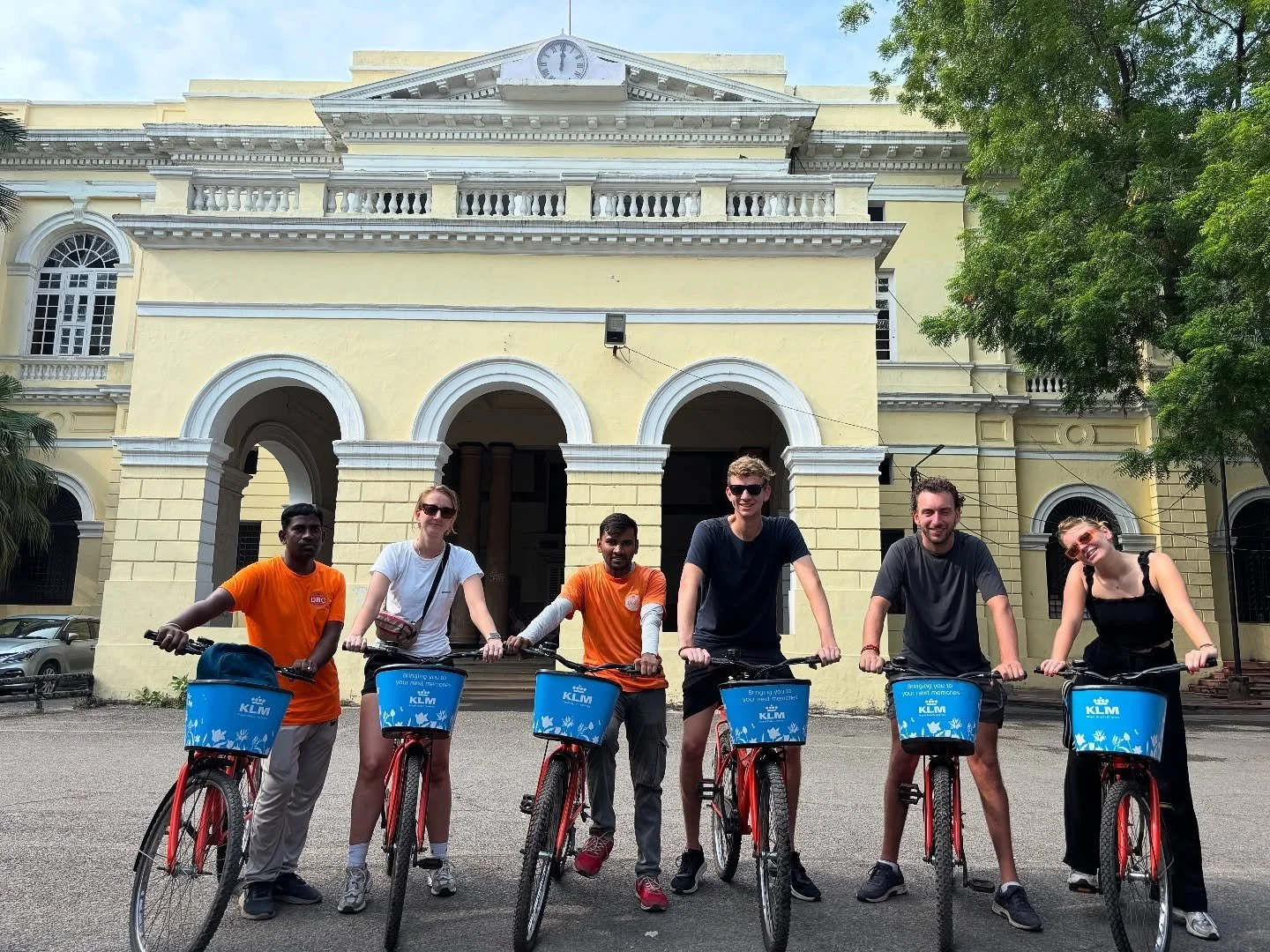
Travel for holidays—well, that is a fairly new concept in the history of humanity. For the last 20,000 years of modern human history, humans traveled for everything but holidays. Going on modern vacations started as a byproduct of colonization, slowly transformed into a symbol of status, reputation, and wealth, and occasionally served as a genuine way to take a break. Then, without even realizing it, we started traveling for social media.
Before all that, we used to travel to find new fertile ground, to seek out fresh sources of water to survive, to gain wisdom from a monk in the East, or to migrate to a safer city in the West. We traveled for deeply human reasons: to survive, learn, and grow.
Somehow, we have forgotten why we started traveling in the first place. What we are doing now in this fast-paced world isn’t just traveling; we are destroying resources at a rapid speed for the sake of tourism. There is a saying that fast travel is like fast food: it fills you up quickly but leaves you hungry again soon after, all while being bad for your health. So, maybe it is time to start asking ourselves a fundamental question: Why are you traveling in the first place?
Why You Need to Slow Down
The answer is simple: so that you can see more.
Most closed-window car or bus tours drive 400 kilometers in a day. But did you really experience those 40 villages you passed by? Did you see the local well that the community has been using for the last 400 years? Did you visit the small rural market supporting the real local economy, or the temple where cows were resting under the shade of a tree? Did you taste the unique cuisine only available in that small town you sped right past?
Those are just a few of the countless small, unique moments you miss. These experiences don’t just connect you with the local environment, people, and culture, they truly make you a part of it. They leave a lifelong impression and bring you closer to reality, rather than just a collection of stereotypical images.
When you travel slowly, you also end up exploring a place in a detailed manner. You support more local businesses and stay longer in one place, which naturally reduces simple things like cleaning expenses, lowers fuel consumption, and leaves a deeper, genuinely positive impact on the communities that need it most. You become part of the stories that happen between destinations. You end up collecting more memories and stories.
You become a true traveller, rather than just a tourist.
How Bicycles Play Their Part
Bicycles force you to take small roads, stop at small shops, and explore "the road less traveled"—just as the poet Robert Frost always wanted us to do. Bicycles turn strangers into storytellers.
Imagine you are cycling through a small village in India with your group and you stop for a tea (chai) break. Suddenly, you meet a villager dressed as simply as you can imagine. A conversation starts, and you end up learning that he used to work in Silicon Valley but came back to serve the students of his village and live a simple life.
This is a true story from one of the trips I was on, and believe me, we collect a story like this every single day. On another trip, a woman from a small village who was selling fish on the street with her friends invited our entire group to her home for lunch.
As a machine, the bicycle is open and inviting. It makes the people around you feel safe to share their lives and stories, unlike cars, which are large, enclosed, and uninviting. Cycles change not just the way you see places and people, but they also change the way people look at you. It is a matter of fact that travellers on cycles are treated differently than tourists in buses and cars, at least in the rural and less-commercialized parts of India.
Global Numbers, Real Impact
People often counter that cycle tours aren't big enough in numbers to sustain the tourism sector as a business, or that they won't generate enough jobs. So, let’s talk numbers.
The worldwide market for cycling holidays reached approximately $146 Billion USD in 2025, and it is projected to grow to $300 Billion USD by 2035. Currently, Europe is the largest market, and Asia-Pacific is the fastest-growing one. Germany alone is already generating 23 billion euros in business from cycling tourism, creating more than 250,000 jobs.
The numbers clearly point toward a slower, better, and more conscious side of the tourism industry. Imagine the power of these numbers and their potential to change tourism for good.
India By Cycle
The journey of India By Cycle started with a 3,300 km journey when I cycled across India and experienced the deeper soul of the country and its people. That single journey changed me forever. It taught me how to live in the present, live slowly, and experience things deeply.
Cycling took me to villages I never imagined existed. I saw landscapes beyond the word "magical," tried food for which "delicious" is an understatement, and met people with hearts way bigger than their wallets. Cycling made me realize how beautiful the world is, and how it is only possible to truly experience it when you go slow.
Now, we host these slow tours across the diverse landscapes of India; from the beautiful forests and coasts of South India to the royal dreams of Rajasthan, and from the mighty Himalayas to the dense forests of Central India. Cycling holidays are still a new concept in India, and it will take some time for the market to mature. But in the meantime, we are here to make sure you experience something unique, slow, magical, and unheard of.
We hope these slow experiences make you fall in love, not just with cycling holidays, but with India itself.
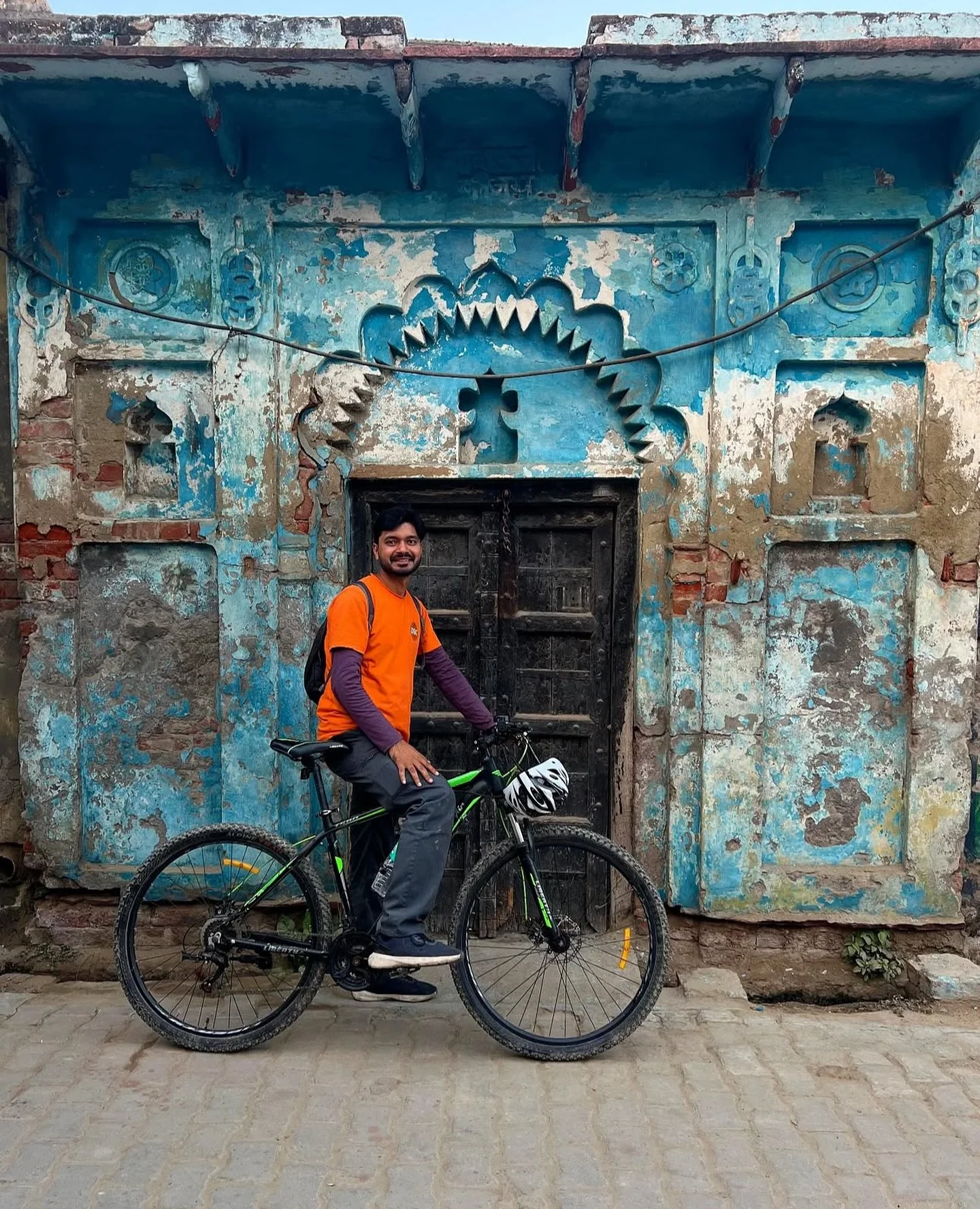
About the Author: Meet Himanshu Shekar
Himanshu is the CEO and Director of Delhi By Cycle, a visionary entrepreneur, and a leading voice in sustainable, slow travel. After a brief background in finance, a life-changing 3,300 km cycling expedition across India pivoted his path toward human connection, storytelling, and ethical exploration. Under his leadership, DBC has expanded its soulful footprint far beyond Delhi's city borders, bringing its unique flavor of slow tourism to historic regions like Agra, Jaipur, and Mysore.
Himanshu is also our go-to India programming partner—collaborating with us on our upcoming Root to Rise trip! We trust him implicitly because he truly is the best of the best. Putting tires to the ground with Himanshu means seeing a side of India you simply cannot find from a tour bus window. It's an opportunity to break down boundaries, connect genuinely with local residents, and immerse yourself deeply in the local culture, all while choosing a footprint that is gentle on the environment.
Beyond DBC, Himanshu is the founder of Gyan Yatra, a sustainable travel company dedicated to ethical, non-commercialized "wisdom journeys" across the Himalayas and Central India. Driven by a desire to give back, he also channeled DBC’s revenue and profits to launch @publicmobilityproject: a non-profit organization actively working to redesign urban spaces and make Indian cities safer, greener, and friendlier for cyclists and pedestrians alike.